Leadership
You can’t coach every deal. Something should.
Most coaching happens after the deal is already lost. How good managers make their limited time count, and how to get help into the conversation itself.

Ask any sales manager how much of their day goes to actual coaching, then watch them laugh.
Here’s a fairly normal Saturday. At 9:30 they’re approving numbers on a deal that’s been going back and forth since Thursday. At 10:15, a customer wants to talk to a manager. At 11, they’re chasing a missing title. At noon, someone calls in sick and they’re covering the phones. Somewhere in there, they’re supposed to make every rep on the floor better.
It doesn’t add up. There’s one of them and a whole floor of salespeople, and the calls are happening right now.
Most coaching arrives after the customer leaves
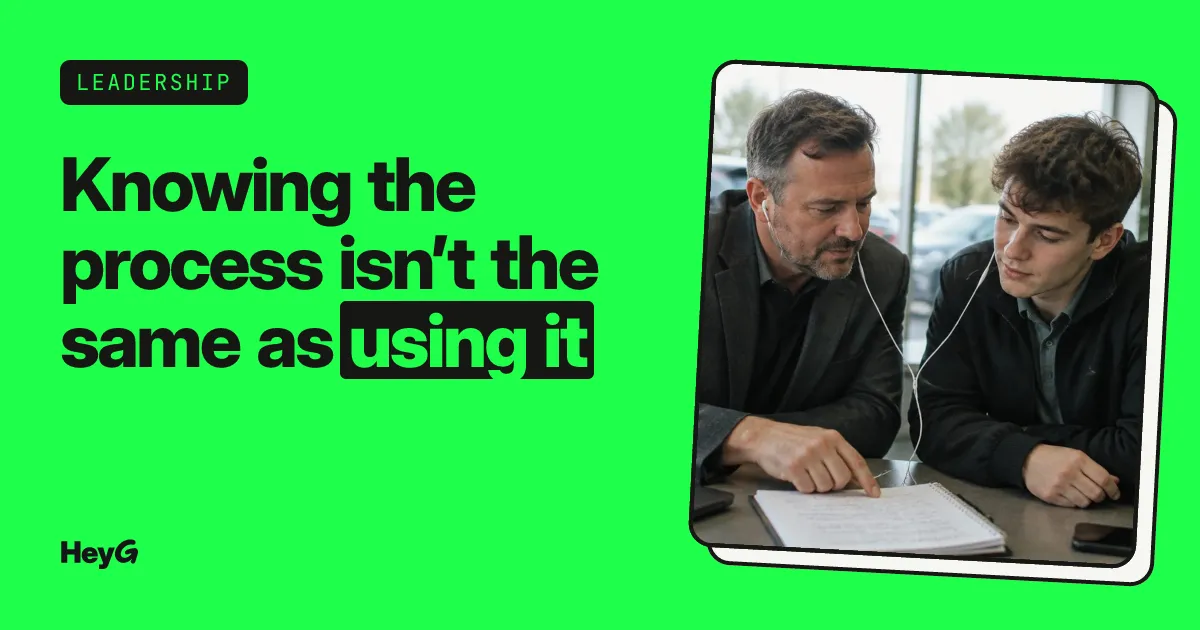
A deal falls apart. The manager hears about it at the end of the day, or at Monday’s meeting. They ask what happened, the rep does their best to remember, and the manager says, “Next time, try this.”
That advice might be great. But the customer is gone, and “next time” is a different customer with a different objection. The coaching that actually changes outcomes happens in the moment, when the customer says “I’m just looking” and the rep needs a better answer than “okay, let me know.” Managers know that. They just can’t be on every call.
How good managers stretch the time they have
Even stretched thin, some managers build teams that keep getting better, and they tend to share a few habits.
They pick three or four conversations that matter most and drill those until they stick, instead of handing out twenty word tracks. They spread what the best people actually say, because the top closer’s answer to the trade objection is worth more than any training video. They listen to a few calls each week, since five minutes of listening teaches more than an hour of reports. And they catch people doing it right, in front of the team.
Above all, they coach the next conversation instead of the last one. “Who are you calling this afternoon? What do you know about them? How are you going to open?” That’s coaching that lands while it still matters.
The newer the floor, the harder this gets
Veterans need a nudge. New hires need help on almost every call, and they’re the least likely to ask, because nobody wants to look like they don’t know.
So the new rep wings it. They’re not doing anything wrong. They just haven’t heard enough customers yet to know what usually comes next. Some figure it out, some leave before they do, and either way your customers are the ones they’re practicing on.
Put the playbook where the conversation is
The fix isn’t more meetings. It’s getting your store’s best answers into the conversation itself: an opening that’s ready before the rep dials, a good next line when the customer pushes back, one that fits this customer and sounds like your store, and a follow-up that starts from what was actually said.
That’s what HeyG is for. LANE has the opener and the follow-up ready, and Wingman gives your rep guidance during the call, built on your store’s process and the customer on the line, and the rep decides what to use. It doesn’t replace the manager. It means the manager isn’t the only source of help on the floor anymore.
Try this before Monday
Ask yourself what you’d do with one more hour of real coaching time a day. Ride along on more calls? Spend real time with the new hires? Work the deals that are stuck instead of the ones that are loud?
Whatever your answer is, that’s where your coaching is worth the most. The goal is to protect that time by handling the basics somewhere else, so the hour you do get goes to the conversations only you can have.