AI
Stop asking whether the AI sounds human
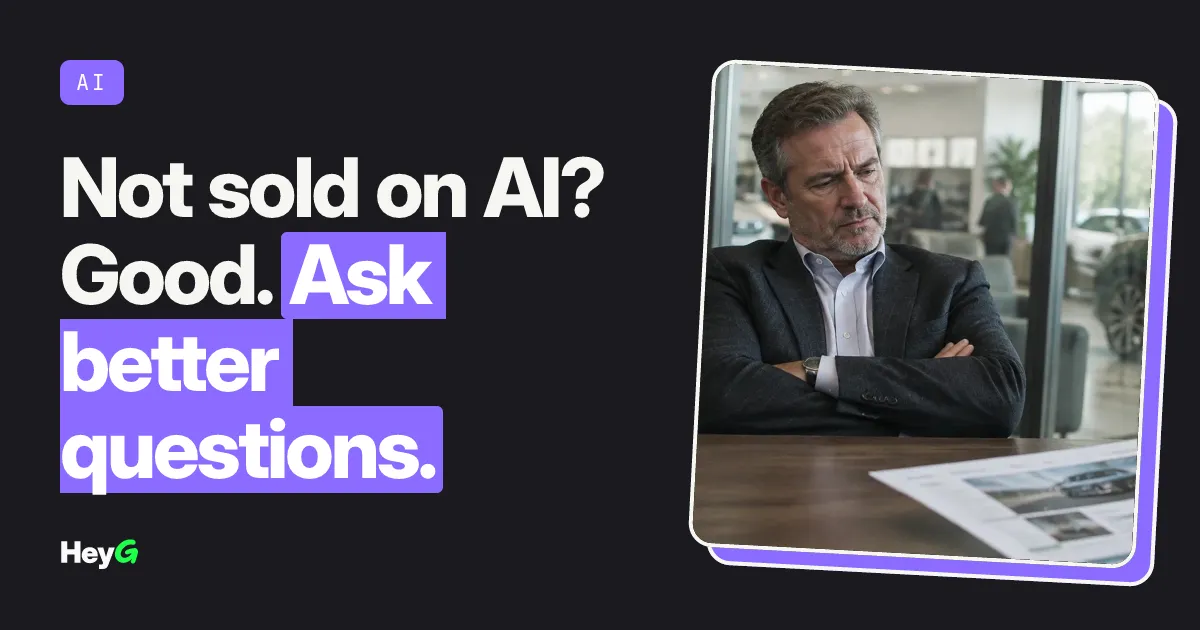
A lot of automotive AI is sold on how convincingly it imitates a person. The better question is whether it makes your people better at the moments that matter.

A lot of automotive AI gets judged on one question: does it sound human? Can it hold a conversation, sound warm on a text, handle a phone call without the customer catching on?
That’s an impressive party trick. It’s also the wrong test.
Your customers aren’t grading the software. They’re deciding whether your store was paying attention. And the people who make them feel that way, or don’t, are still your salespeople, BDC agents, service advisors and managers. So the better question is simpler and harder: does this make my people better at the moments that matter?
Two calls that both count as a contact
A customer finally picks up. Your salesperson has a few seconds to decide what happens next.
One version runs the standard intro: “Are you still interested in the vehicle?” Polite, and completely disconnected from why the customer started shopping. The other version starts where the customer left off: “You mentioned needing more room now that the family’s growing. Is that still the main thing you’re trying to solve?”
Both get logged as a contact. Only one feels like somebody was listening. That gap, between the call that happened and the call that helped, is where AI earns its keep or doesn’t. A tool that writes more words isn’t automatically helping. A tool that helps your rep find the right question, notice a missing detail or explain the next step clearly probably is.
Describe the problem without saying “AI”
Here’s a test worth running before any technology conversation. Describe the customer moment you want to improve without mentioning AI.
“Customers don’t know what happens after they book” is a real problem people can recognize. “We need AI in our appointment process” isn’t a problem at all. It’s a purchase looking for a reason. If you can’t explain the need without naming the technology, the technology is getting ahead of the need.
Support people can actually use mid-shift
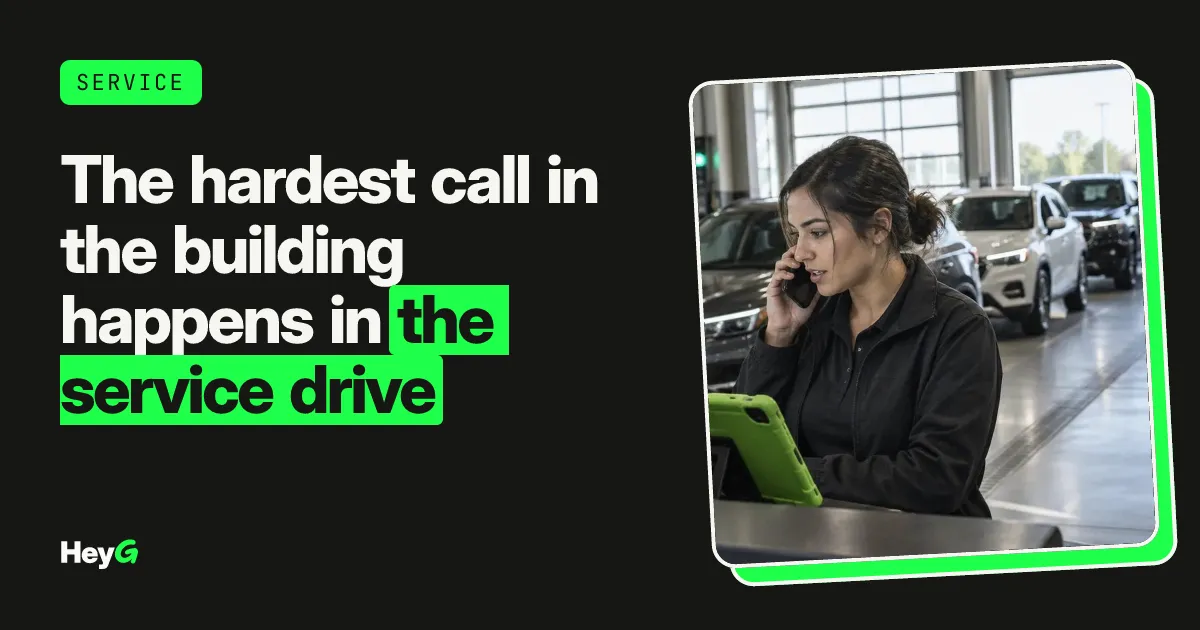
Most dealership employees don’t need another reminder to be more personal or follow the process. They already know. What they need is help doing it while the work is happening, between a walk-in and a callback, with a manager waving from the desk.
That’s why the measure of a useful tool is whether the next action gets clearer. What matters in this conversation? What do we know? What still needs to be asked? If the answer to any of those requires opening three more screens, the tool added work instead of removing it.
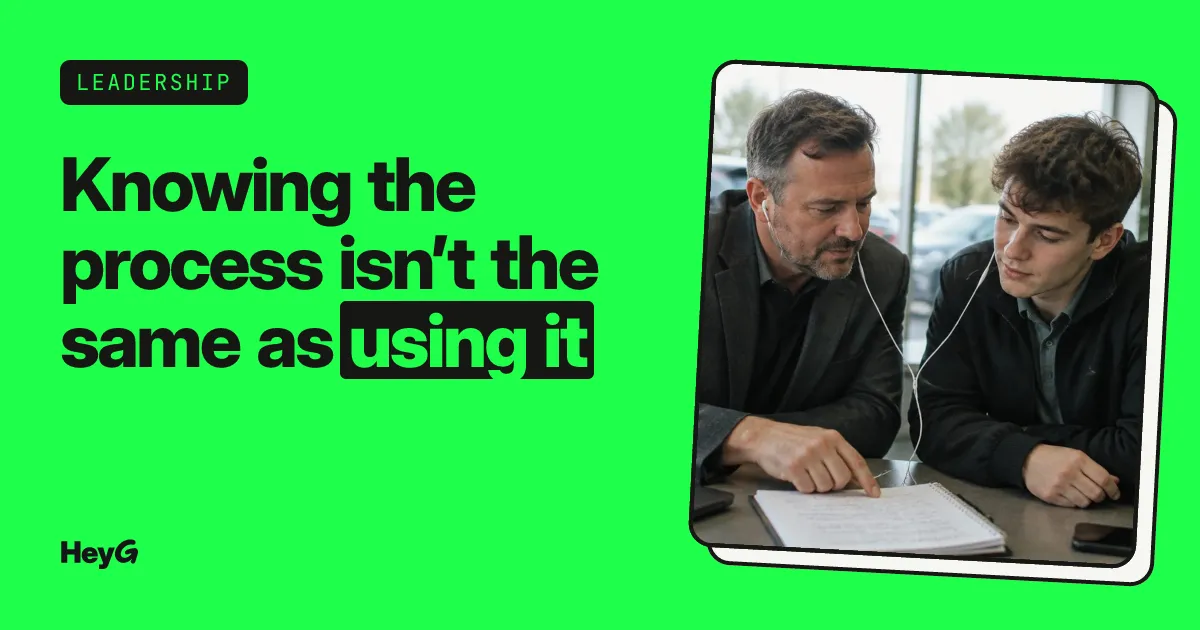
It also needs to respect experience. A newer rep may need a starting point. A twenty-year veteran needs a tool that helps them notice something, not one that makes every conversation sound like it came off the same script. And the person deciding whether it works shouldn’t only be the one watching the demo. Ask the people using it what showed up at the right time, what was wrong, and what they had to do twice. You’ll learn more from that than from a vote on whether the team likes AI.
The customer hears your store, not the software
Assistance and judgment are different jobs. A system can surface information and suggest wording. It can’t make your store stop being responsible for what the customer hears, what gets promised, or how an awkward moment gets handled.
That matters most when the conversation goes off script. A follow-up that was supposed to be a simple check-in gets a reply about a complicated trade situation. The right next step isn’t for the software to keep talking because it can. It’s for the right person to pick it up, with the context, and for the customer to know someone owns it.
Customers should never have to work out who’s accountable. Your store should already know.
Judge the conversation, not the activity count
More messages, more calls and faster responses are easy to count, and they’re useful. They just don’t tell you whether anyone was helped. A quick reply can miss the question. An appointment can get booked with nobody clear on what it’s for. A fluent message can still be wrong.
So hold AI to the same standard you’d hold a new hire. Review real conversations. Was it relevant? Was it accurate? Did the customer know what happens next? If a suggestion keeps causing confusion, the answer isn’t telling your team to trust it more. Fix the information or the guidance, and keep what genuinely helps.
The technology should support the connection. The connection is still the point.